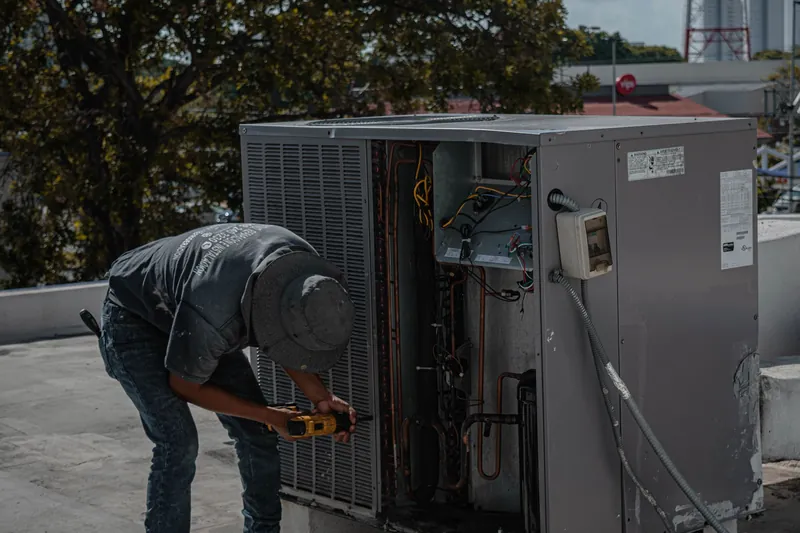
Yes, FAFSA covers trade school when two things are true. The school must take part in federal student aid, and your program must meet federal length rules. A program of at least 600 clock hours over at least 15 weeks can get federal student loans. It can also get Pell Grants of up to $7,395 a year in 2026–27. Shorter programs get less aid, or none.
Figures and rules checked November 2, 2026. The 2026–27 award year runs from July 1, 2026 to June 30, 2027.
What makes a trade school eligible for FAFSA
A trade school is eligible for FAFSA money only if it has signed an agreement with the U.S. Department of Education to take part in federal student aid. To sign one, the school must be licensed by its state and accredited by an agency the Department recognizes. Schools that skip this step can still be legal and licensed, but their students can't use Pell Grants or federal loans there.
Many trade programs are taught at public community and technical colleges. Others are at private career schools. Both kinds can take federal aid if they meet the rules.
Source: 34 CFR 600.4 to 600.6 (eligible institutions) and 34 CFR 668.14 (program participation agreement).
Which trade programs qualify for Pell Grants and loans
A trade program's length decides which federal aid it can get. Clock hours are the hours you spend in class, in the shop or in clinical training. This table shows the federal rules for programs that don't lead to a degree.
| Program length | Federal aid it can get |
|---|---|
| 600 clock hours or more, over at least 15 weeks | Pell Grants and federal student loans |
| 300 to 599 clock hours, over at least 10 weeks | Federal student loans only, and only if at least 70% of students finish and 70% get jobs |
| 150 to 599 clock hours, over 8 to 14 weeks | Workforce Pell, if the state and the Department of Education approve the program |
| Under 150 clock hours, or under 8 weeks | No federal student aid |
Programs measured in credits follow the same idea. A certificate needs at least 16 semester credits (or 24 quarter credits) over at least 15 weeks to get Pell.
A school can offer one program that qualifies and another that doesn't. Always check the exact program.
Source: 34 CFR 668.8(d) and (e). Workforce Pell: Public Law 119-21, Sec. 83002, and 34 CFR 690.92.
How much FAFSA aid you can get for trade school
The most you can get from a Pell Grant in 2026–27 is $7,395 for a full year of full-time study. Pell doesn't have to be repaid unless you withdraw early. Your amount depends on your Student Aid Index (SAI), the number the FAFSA uses to measure what your family can pay. Our SAI chart shows the Pell amount for each SAI.
Federal student loans can add more. A first-year dependent student can borrow up to $5,500 a year. A first-year independent student can borrow up to $9,500. If your program is shorter than a full academic year, the school must cut your loan limit in proportion to the program's length.
Many trade programs run less than a year. A 700-hour program, for example, may get a share of the yearly Pell amount, paid in two parts. The school's financial aid office works out your exact award.
See trade programs near you that accept FAFSA
Source: Dear Colleague Letter GEN-26-01 ($7,395 maximum). 34 CFR 685.203 (loan limits and proration for programs under one academic year).
What is Workforce Pell for short trade programs
Workforce Pell is a Pell Grant for short job-training programs, starting with the 2026–27 award year. It covers programs of 150 to 599 clock hours that run 8 to 14 weeks. Each program must be approved by its state's governor and then by the Department of Education.
As of October 29, 2026, 26 programs in 7 states had both approvals. Our Workforce Pell approved programs tracker lists them by state.
Source: Public Law 119-21, Sec. 83002 (Higher Education Act section 401(k)).
Trade programs that accept FAFSA, by field
Thousands of schools that take federal aid train people for skilled trades and health care jobs. This table shows how many of them awarded credentials in each field between July 2023 and June 2024. It also shows the share of awards that were certificates under 12 weeks. Those very short programs usually can't use Pell.
| Field | Schools that take federal aid | Share of awards under 12 weeks |
|---|---|---|
| Welding | 892 | 10% |
| HVAC | 589 | 1% |
| CDL truck driving | 227 | 44% |
| Medical assistant | 1,051 | 2% |
| Phlebotomy | 313 | 58% |
| CNA | 484 | 79% |
| Pharmacy technician | 359 | 1% |
| Dental assistant | 546 | 1% |
| Medical billing and coding | 525 | 1% |
| Cosmetology | 1,348 | Under 1% |
| LPN | 933 | 11% |
Each linked guide lists the schools by state. Being on a list means the school takes federal aid and trained students in that field. It doesn't mean every program there qualifies for Pell.
Source: IPEDS 2024 Completions (July 2023 to June 2024), schools taking part in federal student aid. Education Directory analysis.
How to check if a trade school accepts FAFSA
Check the school first, then the exact program.
- Search for the school on College Navigator (nces.ed.gov/collegenavigator). If its financial aid section shows students receiving Pell Grants or federal loans, the school takes part in federal aid.
- Search for the school's federal school code at studentaid.gov. You need this code to send your FAFSA to the school.
- Email the financial aid office with the full program name. Ask, "Is this program eligible for Pell Grants and federal student loans for 2026–27?"
- Ask how many clock hours or credits the program has and how many weeks it runs.
- Fill out the FAFSA at studentaid.gov and list the school.
- Wait for the written financial aid offer before you sign an enrollment agreement.
If a school says it "accepts FAFSA" but the program is only a few weeks long, ask which aid applies. Some schools offer payment plans or private loans for programs that don't qualify.
Who can use FAFSA at a trade school
You need to meet the usual federal aid rules. These include a high school diploma or GED, U.S. citizenship or eligible noncitizen status, and a valid Social Security number. A bachelor's degree rules you out of regular Pell. You can still get federal loans, and Workforce Pell if you have no graduate degree. Our guide to who is not eligible for a Pell Grant covers each rule and what to do about it.
You don't need to be a recent high school graduate. Age doesn't affect FAFSA eligibility.
Source: 34 CFR 668.32 (student eligibility).
Other ways to pay for trade school
If your program doesn't qualify for FAFSA, other money may still be available. Your local American Job Center can pay for approved training through WIOA, the federal job training program. Veterans can use the GI Bill at approved trade schools. Some employers and unions pay for training through apprenticeships.
Questions to ask the trade school before you enroll
Ask these in writing so you have a record:
- Does your school take part in federal student aid, and what is your federal school code?
- Is my program eligible for Pell Grants, federal loans, or Workforce Pell?
- How many clock hours and weeks is the program?
- What is the full cost, including tools, uniforms and exam fees?
- When will my Pell be paid, and when will I get any refund?