Five starsTrusted by 70,000+ Future Students

Subject guide

Manufacturing Engineering

If you're passionate about designing, managing, and optimizing production systems, you may want to consider pursuing a degree in Manufacturing Engineering. This specialized branch of engineering combines principles from mechanical engineering, industrial engineering, and material science to prepare you for a fruitful career in sectors such as automotive, aerospace, energy, electronics, and more. Aspiring manufacturing engineers like you will learn to design efficient manufacturing systems, innovate production techniques, and ensure quality in output. Embarking on this path in higher education can help you turn your aspirations into a rewarding career, building a future that is not only prosperous but meaningful as well.

Find school options
Manufacturing Engineering study and career guide

Manufacturing Engineering

As an individual looking to elevate your education and career, the field of Manufacturing Engineering offers exciting and pioneering opportunities. This is a unique discipline within the broader engineering industry that focuses on the design and optimization of manufacturing systems and processes. In the context of higher education, this field integrates principles of material science, engineering, design, automation, and management to create faster, safer and more efficient production systems. A degree in Manufacturing Engineering equips you with the knowledge and skills to understand and improve every aspect of making tangible products, from product design to material selection, production scheduling, and quality control. It's an excellent choice if you have a passion for innovation, problem-solving, and mechanical systems, and it can lead to dynamic and rewarding careers in sectors ranging from automotive to electronics, aerospace, and beyond. As always, it's essential to choose a school that aligns with both your educational needs and career aspirations.

Explore this subject within Science & Engineering.

Manufacturing Engineering Program goals

Studying a program in Manufacturing Engineering equips you with a comprehensive understanding of how items and products are designed and constructed. This undertaking aims to prepare you for lucrative roles in various sectors that rely on manufacturing processes, to improve quality, productivity, and sustainability. Along the way, you'll harness your problem-solving skills, develop managerial abilities, and acquire knowledge in operations management, lean manufacturing, and manufacturing design.

  • The principal goal is to gain a thorough understanding of manufacturing processes and systems.
  • Equip yourself with the practical skills and knowledge required to design, implement, and manage manufacturing systems and processes.
  • Develop problem-solving abilities to address challenges in manufacturing and production.
  • Learn to assess and improve quality and productivity while ensuring sustainability in manufacturing practices.
  • Ultimately, prepare for a promising career in various sectors that depend on manufacturing operations.
Manufacturing Engineering Program goals illustration

What are the Student Learning Outcomes

Considering a program in Manufacturing Engineering means you're looking at a path that's designed for growth, innovation, and future-proof skills. When you study this subject area, you are set to understand, design and improve complex systems, processes, and machinery used in manufacturing and industrial production. You'll build your abilities in problem-solving, project management, and efficient resource allocation. Moreover, with a strong underpinning of engineering principles aimed at enhancing productivity and quality, the curriculum sets the foundation for an engaging career in this field.

  • Proficiency in applying core concepts in manufacturing and materials engineering.
  • Develop critical thinking and problem-solving abilities specific to manufacturing processes.
  • Gain ability to design and implement systems for production, quality control, logistics, and distribution.
  • Accrue knowledge and compliance with safety and environmental standards in manufacturing.
  • Acquire skills for technologies such as CAD, CNC, and Automation in manufacturing.
  • Promote teamwork and multidisciplinary collaboration in industrial projects.
What are the Student Learning Outcomes illustration
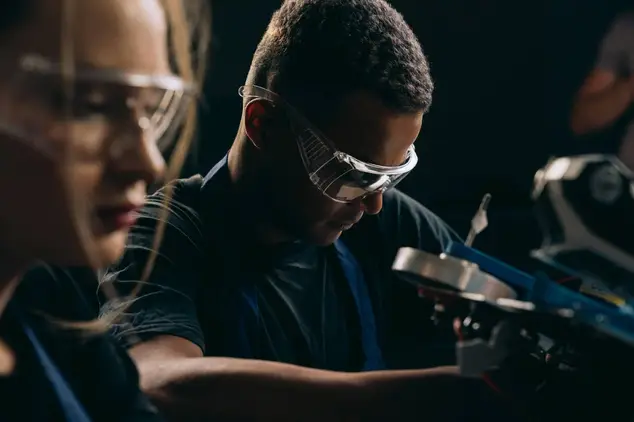
Photo by This is Engeneering on Unsplash

What experience do I need to be able to apply for Manufacturing Engineering

You need a defined set of experiences to begin a higher education program in Manufacturing Engineering. This is an intricate field involving the design and optimization of production systems via advanced technology integration and efficient manufacturing methods. It is essential to have a well-rounded grounding in math, science, and engineering principles. Prior experience in mechanical drafting or computer-aided design (CAD) would be highly beneficial. Also, understanding project management and having some hands-on experience with modern manufacturing equipment could give you a competitive edge. Active problem-solving skills can help you excel in this field that relies heavily on fixing any manufacturing issues that might arise.

  • Familiarity with basic principles of math, science, and engineering.
  • Experience in mechanical drafting or computer-aided design (CAD).
  • Understanding of project management concepts.
  • Hands-on experience with modern manufacturing equipment.
  • Proven problem-solving skills.

Remember, your enthusiasm and willingness to learn can also make a tremendous difference. It's never too late to bolster your knowledge and enhance your skills. The journey to becoming a manufacturing engineer can be challenging, yet undoubtedly rewarding. With the right preparation and mindset, you have the potential to succeed in this exciting profession and make an impactful contribution to the sector.

What experience do I need to be able to apply for Manufacturing Engineering illustration

Manufacturing Engineering careers

After earning a postgraduate degree in Manufacturing Engineering, a myriad of career opportunities await you. The skills and knowledge you acquire will not confine you to a single industry but grant you access to several sectors, including electronics, aerospace, and automotive industries, among others. You could work on creating efficient manufacturing processes, designing innovative manufacturing systems, or conducting research to enhance production methods. From Product Development Engineer to Production Manager, your advanced degree offers you diverse roles with competitive salaries and tangible impact.

  • Product Development Engineer: You could use your expertise to design and improve products, ensuring they are cost-effective and high quality.
  • Process Engineer: In this role, you would identify and implement process improvements, using your advanced skills to increase efficiency and boost production.
  • Quality Assurance Manager: Overseeing production processes and ensuring they comply with industry and company standards would be your primary duties.
  • Production Manager: You could ensure the smooth and efficient operation of manufacturing processes, with prime responsibilities including planning and organizing production schedules.
  • Manufacturing Systems Engineer: You would design and develop manufacturing systems, aiming to increase productivity, minimize waste, and boost profitability.

Remember, these positions only represent a fraction of the jobs you can pursue. Whether you're drawn to design, management, or research, a postgraduate degree in Manufacturing Engineering can help propel you towards your career aspirations.

According to the U.S. Bureau of Labor Statistics (BLS), the median annual wage for industrial engineers was $101,140 in May 2024. The median wage is the wage at which half the workers in an occupation earned more than that amount and half earned less. However, specific data for postgraduates is not available. The lowest 10 percent earned less than $65,320, and the highest 10 percent earned more than $124,000 based on general data.

Source

Additional Wage Information

If you're considering pursuing post-graduate studies in Manufacturing Engineering, it's important to know the wealth of career options that will be available to you. Many graduates go on to become Manufacturing Engineers, working to optimize manufacturing processes and ensuring products are made efficiently and to the highest quality standards. Others explore roles as Quality Assurance Engineers, critically examining manufactured goods to ensure they meet the necessary specifications and standards. Some may go on to become Project Managers, overseeing the entire lifecycle of manufacturing projects, from initial planning to delivery. There are also opportunities to work in academia, teaching and researching the latest developments in the field. Remember, graduates often see an increase in earning potential, yet this may vary based on different factors such as location, specific job title, and experience level.

Ready to compare Manufacturing Engineering programs?

Share your study preferences once. We’ll use them to find relevant school options.

Find school options