Five starsTrusted by 70,000+ Future Students

Subject guide

Computer Hardware

As you venture into the world of higher education, you may be considering a focus on Computer Hardware. This critical field underpins our digital world, anchoring the performance of everything from our smartphones to supercomputers. Your studies could lead you to design, develop, and optimize the physical components of computer systems, providing a valuable contribution to technology's ever-evolving landscape. Understanding computer hardware can position you for promising career opportunities in a thriving sector. We are here to guide and support you in your educational journey, providing reliable information to help match you with the ideal school to meet your educational needs and career aspirations.

Find school options
Computer Hardware study and career guide

Computer Hardware

If you're interested in the intricate world of computers and seeking higher education in the field, a focus on Computer Hardware could unlock potential new paths for your career. Computer Hardware refers to the physical components of a computer, including motherboards, hard drives, and processors - it's everything tangible that powers the intangible programs you use daily. Understanding this realm is integral to computing, as it provides vital insights into how devices operate and how to optimize their performance. While it's a technical field, it is thrillingly tangible, providing the opportunity to physically build and modify systems to achieve top notch performance. Let's explore together how an education in Computer Hardware could be your stepping stone towards an exciting and rewarding career in technology.

Explore this subject within Computers & Technology.

Computer Hardware Program goals

Embarking on a program in Computer Hardware is an exciting journey to hone your technical skills, prepare for a rewarding career, and empower you to contribute meaningfully to the evolving digital world. This program combines in-depth theoretical learning with hands-on practice, designed to provide you with a clear understanding of computer systems, from their fundamental elements to their complex networks. Navigating this field of study can seem overwhelming, but our aim is to ensure each participant is well-equipped with the knowledge and skills to discover success in their chosen career path.

  • To understand the basic principles and components of computer hardware.
  • To master the ability to troubleshoot and repair computer systems.
  • To enhance critical thinking and problem-solving skills through practical projects and real-world applications.
  • To acquire the technical competency required for computer hardware design and networking.
  • To prepare for a rewarding career in diverse fields such as computer manufacturing, system design, computer programming, network administration, and more.
  • To continually adapt and upgrade your skills to keep pace with rapidly evolving technology.
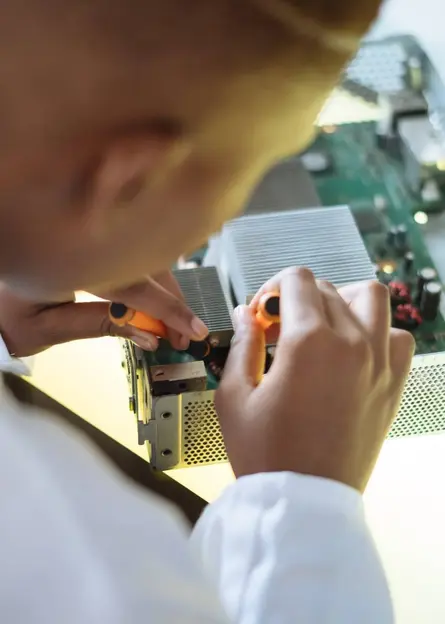
Computer Hardware Program goals illustration

What are the Student Learning Outcomes

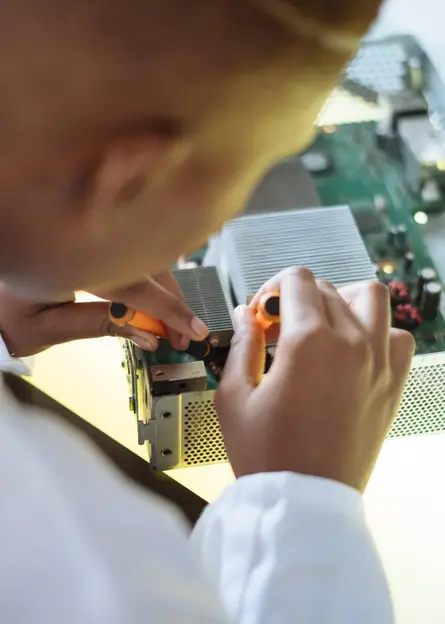
By studying a program in Computer Hardware, you are setting yourself on track to unlock a world of exciting opportunities in the technology sector. This program will equip you with the knowledge and skills necessary to build, troubleshoot, and maintain computer systems. You'll delve into the complexities of computer architecture, learning about how each component interacts with the others, and understanding how to optimize system performance. From microprocessors to hard drives, you'll master the hardware that keeps our digital world spinning.

  • Understanding of computer architecture and its core principles.
  • Ability to assemble and disassemble computer systems.
  • Skills to diagnose and repair hardware-related problems.
  • Competence in maintaining and upgrading hardware components for optimized performance.
  • Knowledge of latest computer hardware technologies and developments.
What are the Student Learning Outcomes illustration
Photo by This is Engeneering on Unsplash

What experience do I need to be able to apply for Computer Hardware

Starting a higher education program in computer hardware may seem daunting, but with the right experience, it's very achievable. Prior to enrolling in any computer hardware program, it's important that you have a solid understanding of the basics of computer systems. This includes knowledge of operating systems, familiarity with different types of hardware components, and understanding of how they interact. Basic programming knowledge can also be helpful, although not always necessary. On top of the technical aspects, you should also have strong problem-solving skills, an analytic mind, and the ability to work both independently and in a team. Remember, however, that these requirements can vary depending on the specific program and institution.

  • Understanding of basic computer systems
  • Knowledge of different hardware components
  • Basic programming skills
  • Strong problem-solving abilities
  • Analytical thinking
  • Ability to work independently and in a team
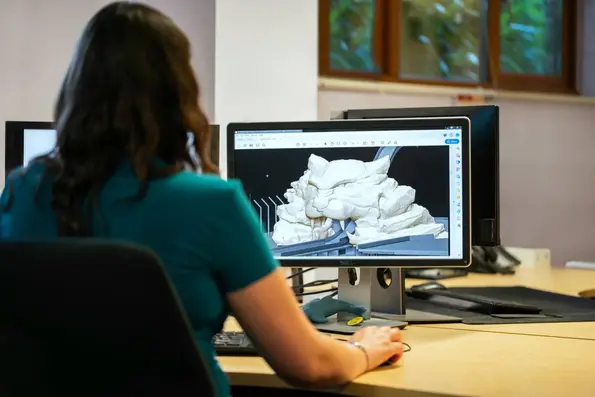
What experience do I need to be able to apply for Computer Hardware illustration

Computer Hardware careers

As a postgraduate in the field of Computer Hardware, you have a wealth of career opportunities available to you. This specialized knowledge could make you an asset in industries such as technology, education, manufacturing and more. Companies across all sectors rely on robust and cutting-edge hardware solutions to carry out their operations efficiently. Your expertise could help them design, develop, and manage these systems. You could choose to become a Hardware Engineer, designing new gadgets, or a Network Architect, ensuring seamless connectivity in offices. A role as a System Analyst or IT Project Manager might also align with your interests, leveraging your technical knowledge while focusing on wider business goals and strategy. There's also scope for careers in the academic or research sector, where you could contribute to future advancements in technology.

  • Hardware Engineer
  • Network Architect
  • System Analyst
  • IT Project Manager
  • Technology Researcher

According to the U.S. Bureau of Labor Statistics (BLS), the median annual wage for computer hardware engineers was $138,080 as of May 2023. The median wage is the wage at which half the workers in an occupation earned more than that amount and half earned less. The lowest 10 percent earned less than $81,630, and the highest 10 percent earned more than $212,770.

Source

Note: There is no data available from the BLS specifically for postgraduate computer hardware engineers' salaries.

You've worked hard to earn your postgraduate degree in Computer Hardware, and now a wide range of job opportunities await you. You could find work as a Computer Hardware Engineer, where you'll design and prototype new hardware technology, or work on improving the designs of existing systems. Another option is being a Network Architect, where you could be creating data communication networks for small or large businesses. IT Project Managers are also in high demand, and they oversee all aspects of a technology project, from planning to implementation. Different industries also offer a variety of roles, with healthcare, finance, telecommunications, and manufacturing sectors all requiring these specialized skills. Having a postgraduate degree in Computer Hardware can lead you into a rewarding, high-demand career where you can apply your advanced technical knowledge and problem-solving skills.

Ready to compare Computer Hardware programs?

Share your study preferences once. We’ll use them to find relevant school options.

Find school options