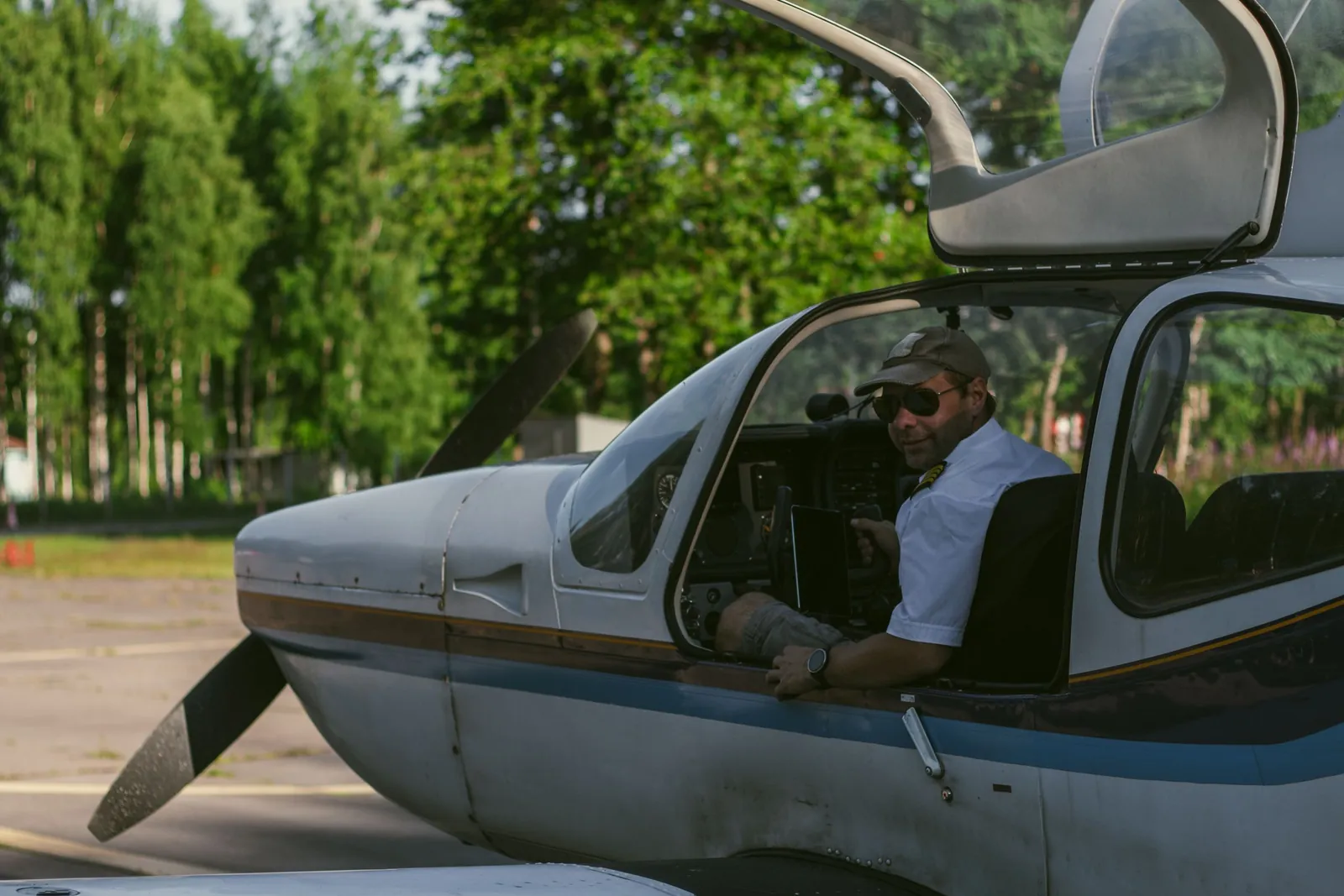
FAFSA can pay for flight training only when it is part of a degree or certificate program at a school that takes federal student aid. We found 103 such schools that awarded pilot credentials between July 2023 and June 2024, and 85 of them are public colleges and universities. Flight school at an airport, outside a college, usually can't be paid for with FAFSA, but the GI Bill may cover it.
Figures and rules checked October 29, 2026. School counts are from the latest federal completions data (IPEDS, July 2023 to June 2024).
Can you use FAFSA for flight school?
Yes, if the flight school is part of, or partners with, a college that takes part in federal student aid. Federal aid goes to schools that the U.S. Department of Education has approved, for eligible programs. An aviation associate or bachelor's degree with flight training built in is the most common route.
The FAA certifies flight schools under its own rules, and that has nothing to do with federal aid. A Part 141 pilot school follows an FAA-approved course and syllabus. Training under Part 61 is less structured and is often given by individual instructors. Either kind of school can only take FAFSA money if it is also approved for federal student aid.
The FAA notes that colleges and universities often train pilots under Part 141. It also notes that training at an approved school can lower the minimum hours for a private pilot certificate from 40 to 35.
Source: FAA, Part 141 Pilot Schools and Pilot Schools Information. Federal aid eligibility: 34 CFR 668.8.
Why flight training often costs more than federal aid covers
For 2026–27, the most a student can get from a Pell Grant is $7,395 a year. Some colleges bill flight hours as lab or course fees on top of tuition, so ask how your school does it. Pell and federal student loans may not cover the full cost.
The FAA says most people need 60 to 75 hours of training to earn a private pilot certificate. That is well above the 35 or 40 hour minimum, and each hour adds cost. Ask the school for its average flight hours and cost per certificate, not the minimum.
Federal student loans have yearly limits, and you repay them with interest. Ask the financial aid office to show you how much of the flight fees your aid offer covers before you enroll.
Source: U.S. Department of Education, Dear Colleague Letter GEN-26-01 (Pell maximum). FAA, Pilot Schools Information (training hours).
How the GI Bill pays for flight training
The GI Bill pays for flight training in two different ways. The rules depend on whether the flight training is part of a college degree or a stand-alone (vocational) program at a flight school.
| Flight training in a college degree | Vocational flight training at a pilot school | |
|---|---|---|
| Who pays out | Post-9/11 GI Bill (Chapter 33), Montgomery GI Bill or DEA | Post-9/11 GI Bill or Montgomery GI Bill only. Not DEA |
| Post-9/11 tuition and fees, Aug. 1, 2026 to July 31, 2027 | Public school: net in-state tuition and mandatory fees. Private school: up to $30,908.34 a year | Up to $17,661.89 a year |
| Monthly housing allowance | Yes, if you go more than half time | No |
| Montgomery GI Bill | Paid like other degree programs | VA pays back 60% of approved fees |
| Before you start | Meet the college's own rules | Hold a private pilot certificate and an FAA medical certificate |
For vocational flight training, VA lists four conditions. You must hold a private pilot's license. On the day you enroll, you must hold a second-class medical certificate. You need a first-class one if you are training for the Airline Transport Pilot (ATP) certificate. And your school must be an FAA Part 141 pilot school or Part 142 training center, with your program approved by VA.
The amounts in the table are for veterans at 100% of the full Post-9/11 benefit. If you qualify for a lower percentage, VA multiplies the cap by that percentage.
See aviation degree programs that accept FAFSA and the GI Bill
Source: VA, Flight Training (va.gov) and Post-9/11 GI Bill Rates, effective August 1, 2026 to July 31, 2027.
Can you use the GI Bill and FAFSA together for flight school?
Yes, you can apply for both. The GI Bill and federal student aid are separate programs, and the school must take part in each one. Read how the two combine in our guide to using the GI Bill and FAFSA at the same time.
Why a degree can shorten the path to the airlines
A pilot normally needs 1,500 hours of flight time for an Airline Transport Pilot certificate. Graduates of some aviation degree programs can qualify sooner, for a restricted ATP that lets them work as a co-pilot.
| Path | Minimum flight time for a restricted ATP |
|---|---|
| Bachelor's degree with an aviation major from an FAA-authorized school | 1,000 hours |
| Associate degree with an aviation major from an FAA-authorized school | 1,250 hours |
| No qualifying degree | 1,500 hours (full ATP) |
Only schools the FAA has authorized can certify graduates for these lower minimums. The FAA posts the list of authorized schools on its ATP training page. Ask any college you consider whether it is on that list.
Source: 14 CFR 61.160. FAA, Pilot Training (ATP) and list of authorized institutions.
Flight schools that accept FAFSA by state
Each row below counts the schools in a state that take federal student aid and trained pilots. Each one awarded at least one professional pilot credential between July 2023 and June 2024. The schools named in each row awarded the most pilot credentials that year.
| State | Schools | Largest pilot training programs (awards in 2023–24) |
|---|---|---|
| Alabama | 2 | Auburn University, Auburn (65) · George C Wallace State Community College-Hanceville, Hanceville (42) |
| Alaska | 2 | University of Alaska Anchorage, Anchorage (3) · University of Alaska Fairbanks, Fairbanks (2) |
| Arizona | 2 | Chandler-Gilbert Community College, Chandler (21) · Cochise County Community College District, Sierra Vista (6) |
| Arkansas | 2 | Ozarka College, Melbourne (25) · Henderson State University, Arkadelphia (6) |
| California | 10 | Mt San Antonio College, Walnut (51) · California Aeronautical University, Bakersfield (46) · Cypress College, Cypress (41) |
| Colorado | 3 | Aims Community College, Greeley (50) · Colorado Northwestern Community College, Rangely (12) · Colorado Mesa University, Grand Junction (6) |
| Florida | 8 | Broward College, Fort Lauderdale (51) · Jacksonville University, Jacksonville (41) · Aviator College of Aeronautical Science and Technology, Fort Pierce (33) |
| Hawaii | 2 | Mauna Loa Helicopters, Kailua Kona (21) · University of Hawaii at Hilo, Hilo (5) |
| Illinois | 4 | Parkland College, Champaign (53) · Southern Illinois University-Carbondale, Carbondale (52) · Quincy University, Quincy (3) |
| Indiana | 6 | Purdue University-Main Campus, West Lafayette (117) · Vincennes University, Vincennes (29) · Indiana State University, Terre Haute (19) |
| Iowa | 2 | University of Dubuque, Dubuque (49) · Indian Hills Community College, Ottumwa (4) |
| Kansas | 3 | Kansas State University, Manhattan (30) · Hesston College, Hesston (3) · Wichita State University-Campus of Applied Sciences and Technology, Wichita (2) |
| Kentucky | 1 | Madisonville Community College, Madisonville (50) |
| Louisiana | 1 | Louisiana Tech University, Ruston (33) |
| Maryland | 1 | Community College of Baltimore County, Baltimore (12) |
| Massachusetts | 1 | North Shore Community College, Danvers (4) |
| Michigan | 3 | Northwestern Michigan College, Traverse City (32) · Eastern Michigan University, Ypsilanti (10) · School of Missionary Aviation Technology, Ionia (3) |
| Minnesota | 3 | Academy College, Bloomington (7) · Lake Superior College, Duluth (3) · Rochester Community and Technical College, Rochester (2) |
| Mississippi | 1 | Delta State University, Cleveland (12) |
| Missouri | 3 | University of Central Missouri, Warrensburg (29) · Ozarks Technical Community College, Springfield (11) · Southeast Missouri State University, Cape Girardeau (1) |
| Montana | 1 | Rocky Mountain College, Billings (12) |
| Nevada | 1 | College of Southern Nevada, Las Vegas (11) |
| New Jersey | 1 | Mercer County Community College, West Windsor (29) |
| New York | 2 | Farmingdale State College, Farmingdale (19) · Dutchess Community College, Poughkeepsie (1) |
| North Carolina | 5 | Guilford Technical Community College, Jamestown (41) · Asheville-Buncombe Technical Community College, Asheville (13) · Craven Community College, New Bern (11) |
| Ohio | 1 | Sinclair Community College, Dayton (24) |
| Oklahoma | 1 | Tulsa Community College, Tulsa (7) |
| Oregon | 5 | Central Oregon Community College, Bend (40) · Treasure Valley Community College, Ontario (32) · Lane Community College, Eugene (15) |
| Pennsylvania | 4 | Community College of Beaver County, Monaca (19) · Community College of Allegheny County, Pittsburgh (5) · Lehigh Carbon Community College, Schnecksville (3) |
| South Carolina | 1 | Charleston Southern University, Charleston (11) |
| South Dakota | 1 | Lake Area Technical College, Watertown (5) |
| Tennessee | 1 | Austin Peay State University, Clarksville (5) |
| Texas | 7 | Tarrant County College District, Fort Worth (48) · Lone Star College System, The Woodlands (19) · Texas State Technical College, Waco (17) |
| Utah | 3 | Utah Valley University, Orem (414) · Southern Utah University, Cedar City (25) · Salt Lake Community College, Salt Lake City (1) |
| Vermont | 1 | Vermont State University, Randolph (13) |
| Washington | 5 | Central Washington University, Ellensburg (40) · Big Bend Community College, Moses Lake (14) · Clover Park Technical College, Lakewood (9) |
| Wisconsin | 1 | Fox Valley Technical College, Appleton (7) |
| Wyoming | 2 | Casper College, Casper (1) · Northwest College, Powell (1) |
No school that takes federal aid reported pilot training awards in 12 states. They are Connecticut, Delaware, Georgia, Idaho, Maine, Nebraska, New Hampshire, New Mexico, North Dakota, Rhode Island, Virginia and West Virginia. Washington, D.C. and Puerto Rico had none either.
Some aviation colleges report pilot training under a different program code, so a school you know may be missing. Some college systems also report all campuses as one school. Being on this list means the school takes part in federal aid and trained pilots that year. It doesn't mean every flight course there qualifies for aid, or that the program is approved for the GI Bill.
Source: U.S. Department of Education, IPEDS 2024 Completions (program code 49.0102, Airline/Commercial/Professional Pilot and Flight Crew) and 2024 Institutional Characteristics.
Public university or private aviation college
Of the 103 schools, 85 are public, 14 are private nonprofit and 4 are private for-profit. In 2023–24 they awarded 918 associate degrees and 715 bachelor's degrees in pilot training. They also awarded about 590 undergraduate certificates.
At a public school, the Post-9/11 GI Bill covers net in-state tuition and mandatory fees. At a private school it stops at $30,908.34 a year. Ask every school how it bills flight fees, since that decides how much your aid and the GI Bill will cover.
How to check if a flight program accepts FAFSA
- Look up the school on College Navigator (nces.ed.gov/collegenavigator). Its financial aid section shows whether students get Pell Grants and federal loans.
- Ask the financial aid office if this aviation program is eligible for Pell Grants and federal loans for 2026–27. Also ask whether flight fees are in your cost of attendance.
- If you are a veteran, search the program in VA's GI Bill Comparison Tool.
- If the college sends you to a partner flight school, ask who bills you for flight hours.
- Fill out the FAFSA at studentaid.gov and add the school's federal school code.
What pilots earn
The median pay for airline pilots, copilots and flight engineers was $232,140 a year in May 2025. Commercial pilots, who do work such as crop dusting and firefighting, earned a median of $123,220. The Bureau of Labor Statistics expects pilot jobs to grow 7% from 2025 to 2035, with about 16,400 openings a year.
Airline pilots usually need a bachelor's degree as well as flight experience. To plan the steps, see how to change careers to become an airline pilot.
Source: U.S. Bureau of Labor Statistics, Occupational Outlook Handbook, Airline and Commercial Pilots.
Questions to ask a flight program before you enroll
- Is this program eligible for federal aid, and is it approved for the GI Bill?
- What do graduates spend in total on flight fees, on average?
- How many flight hours do students need for each certificate, on average?
- Is the school authorized by the FAA for restricted ATP minimums?
- How many students finished last year, and how many got flying jobs?
Compare the answers from two or more programs before you pay a deposit or book flight time.