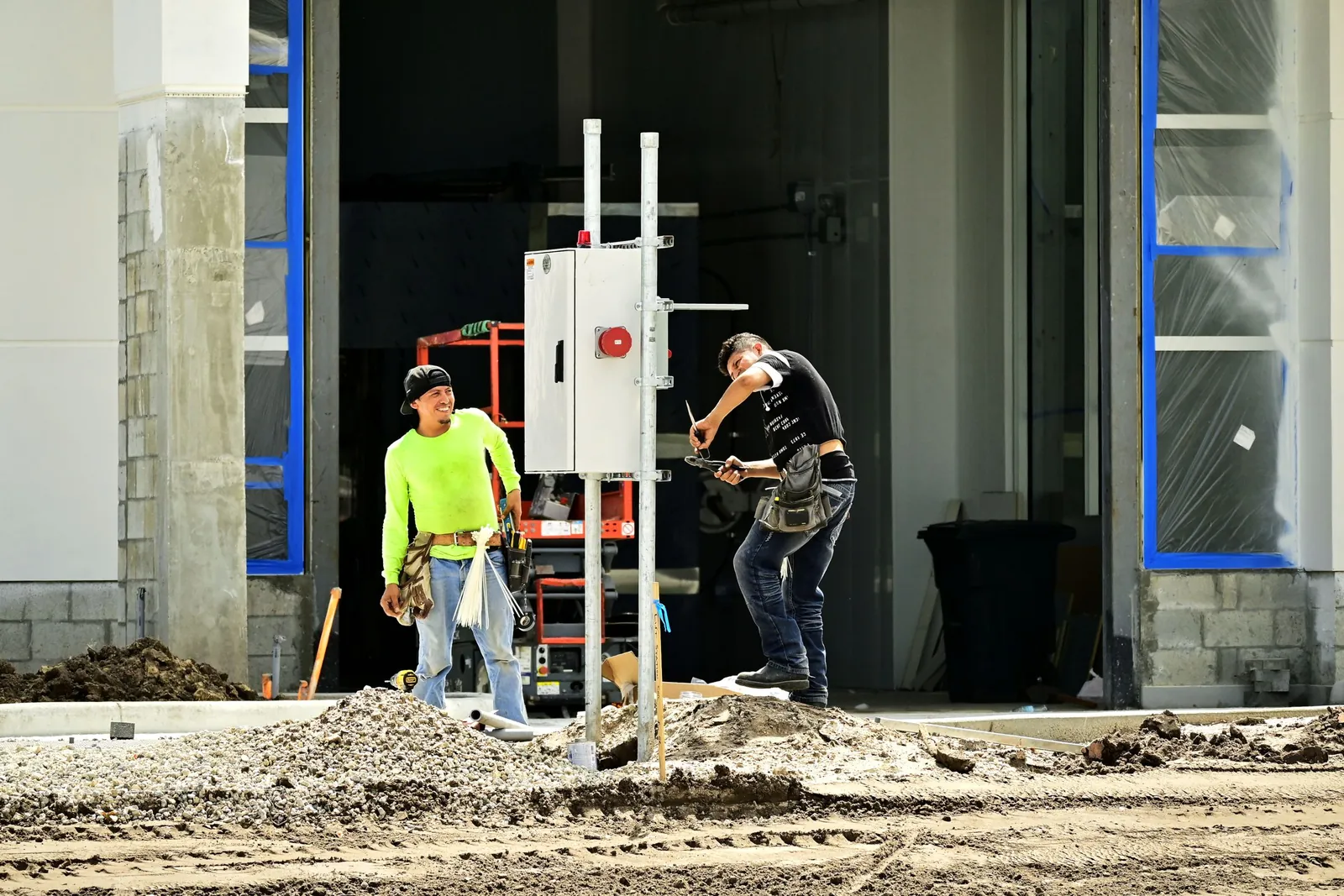
Trade school usually costs less and takes less time than a 4-year college. Average tuition and fees at public 2-year colleges, where many trade programs are, were $4,000 a year in 2022–23. At public 4-year schools they were $9,800. Bachelor's degree holders earn more on average, at a median of $1,578 a week in 2025. Some trades, such as electrician and plumber, pay above the median for all U.S. jobs.
Figures checked November 2, 2026. Tuition is from the National Center for Education Statistics (NCES) for 2022–23. Pay is from the Bureau of Labor Statistics (BLS).
Trade school vs college at a glance
This table compares the two paths on the measures most people ask about. Each row has its own source and year, listed below the table.
| Measure | Trade school (certificate) | 4-year college (bachelor's degree) |
|---|---|---|
| Typical length | A few months to 2 years | 4 years of full-time study |
| Average yearly tuition and fees, 2022–23 | $4,000 at public 2-year colleges, $16,300 at for-profit 2-year schools | $9,800 at public 4-year schools, $40,700 at private nonprofit 4-year schools |
| Earnings | Varies by trade. Electricians earned a median of $63,190 and welders $53,750 in May 2025. | Median of $1,578 a week (about $82,000 a year) in 2025 for full-time workers 25 and older |
| Unemployment rate, 2025 | Not reported for certificate holders | 2.8% |
| Federal aid | Pell Grants and loans if the program meets length rules | Pell Grants and loans |
The earnings figures are not a direct match. The trade figures are for everyone in that job. The bachelor's figure covers full-time workers age 25 and older in all jobs. BLS doesn't publish a separate earnings figure for people whose highest credential is a certificate.
Source: NCES Fast Facts, Tuition costs of colleges and universities (2022–23, in 2022–23 dollars). BLS, Unemployment rates and earnings by educational attainment, 2025. BLS Occupational Outlook Handbook, Electricians, and Welders.
How much trade school costs compared with college
Tuition alone is much lower for most trade programs. At the 2022–23 averages, 1 year at a public 2-year college cost $4,000 in tuition and fees. Four years at a public 4-year school cost about $39,200 ($9,800 times 4).
Private schools cost more on both paths. For-profit 2-year schools averaged $16,300 a year. Private nonprofit 4-year schools averaged $40,700.
These averages leave out tools, books, housing and lost wages while you study. A shorter program also means fewer months without full pay. Ask each school for its total price, and compare it with College Navigator's average net price, which is what students paid after grants.
Source: NCES Fast Facts, Tuition costs of colleges and universities.
Compare trade and college programs near you that accept FAFSA
How long trade school takes compared with college
Many trade programs take less than a year. At schools that take federal aid in 2023–24, 98% of truck driving (CDL) awards were for programs under 1 year. So were 61% of welding awards. HVAC programs last 6 months to 2 years, BLS says. A bachelor's degree is designed to take 4 years of full-time study.
Many students take longer than planned. Among students who started a bachelor's degree full time in fall 2014, 64% finished within 6 years. At 2-year colleges, 34% of students who started in fall 2017 finished within 150% of the normal time. These are the latest figures NCES has posted in this report, and they cover every kind of program at 2-year colleges.
For a list of short programs by trade, see trade school programs that take less than a year.
Source: IPEDS 2024 Completions, award levels. BLS Occupational Outlook Handbook, HVAC mechanics and installers. NCES Condition of Education, Undergraduate Retention and Graduation Rates (updated May 2022).
Do trade school graduates earn less than college graduates
On average, yes. Full-time workers with a bachelor's degree earned a median of $1,578 a week in 2025. Workers whose highest education was a high school diploma earned $966, and those with an associate degree earned $1,135.
Averages hide wide gaps between jobs. These trades paid more than the $50,980 median for all U.S. jobs in May 2025:
| Trade | Median pay, May 2025 | Typical training |
|---|---|---|
| Plumbers, pipefitters and steamfitters | $63,800 | 4 or 5 year paid apprenticeship |
| Electricians | $63,190 | 4 or 5 year paid apprenticeship |
| Heating, air conditioning and refrigeration mechanics | $61,010 | 6 months to 2 years, plus on-the-job training |
| Heavy and tractor-trailer truck drivers | $58,640 | 3 to 6 months |
| Welders, cutters, solderers and brazers | $53,750 | Technical training plus several months on the job |
Electricians and plumbers usually earn while they train through an apprenticeship. That lowers what they pay and how long they go without a wage. Read more in our guide to paid apprenticeships for adults.
Source: BLS, Unemployment rates and earnings by educational attainment, 2025. BLS Occupational Outlook Handbook pages for each job, and all occupations.
Can you use FAFSA for trade school
Yes, if the school takes part in federal student aid and the program is long enough. A program of at least 600 clock hours (the hours you spend in class or training) over 15 weeks can get Pell Grants. Shorter programs may get federal loans or, since July 2026, Workforce Pell. Our guide to whether FAFSA covers trade school explains each rule.
Pell Grants have a lifetime limit of 600%, which equals 12 full-time semesters. A short trade program uses only part of that, so you could still use Pell for college later.
Source: 34 CFR 668.8(d) and (e). Workforce Pell: Public Law 119-21, Sec. 83002. Pell lifetime limit: Higher Education Act, Sec. 401(c)(5).
Who should pick trade school and who should pick college
Trade school can fit you better if:
- You want to work with your hands and start earning within a year or two
- The job you want needs a license or certificate but not a degree
- You can't afford to go 4 years without full-time pay
College can fit you better if:
- The job you want requires a degree, such as teaching or engineering
- You want the higher average pay that comes with a bachelor's degree, and can cover the cost
- You aren't sure yet, and want time to try different subjects
Some people do both. At some community colleges, a certificate counts toward an associate degree later. See certificate vs associate degree for how credits stack.
Questions to ask before you choose
- What is the total cost, including tools, books and fees?
- How long will it take me, attending the way I plan to (full time or part time)?
- What do workers in this job earn where I live? Check careeronestop.org.
- What share of students finished last year, and how many found jobs?
- Will my credits transfer if I want to keep studying later?