Pharmacy technicians and medical assistants earned almost the same median pay in May 2025: $45,750 and $45,690 a year. Medical assistant has nearly twice as many jobs, and BLS expects it to grow about twice as fast.
Pharmacy technician can suit you better if you want to start with little schooling, since many techs train on the job. It also fits if you would rather work with medicines than give hands-on patient care.
Figures and rules checked October 29, 2026. Pay is from the Bureau of Labor Statistics (BLS) for May 2025.
Pharmacy technician vs medical assistant side by side
This table compares the two jobs on pay, training and outlook. Pay figures are medians, so half of workers earned more and half earned less.
| Pharmacy technician | Medical assistant | |
|---|---|---|
| Median pay, May 2025 | $45,750 a year ($22.00 an hour) | $45,690 a year ($21.97 an hour) |
| BLS typical entry education | High school diploma or equivalent, plus on-the-job training | Postsecondary nondegree award (a certificate or diploma) |
| Typical program length | 1 year or less for most certificates | About 1 to 2 years |
| Main certifications | CPhT from PTCB, or CPhT from NHA | CCMA (NHA), CMA (AAMA) or RMA (AMT) |
| State rules | Most states regulate pharmacy techs. Rules vary. | Most states don't require certification |
| Jobs, 2025 | 471,200 | 833,900 |
| Job growth, 2025 to 2035 | 6% (faster than average) | 13% (much faster than average) |
| Largest employer | Pharmacies and drug retailers (51%) | Offices of physicians (56%) |
Source: BLS Occupational Outlook Handbook, Pharmacy Technicians and Medical Assistants.
Which pays more, pharmacy tech or medical assistant
Pharmacy technicians earned $60 a year more than medical assistants at the median in May 2025, which is about the same pay. Your pay will depend more on your state, your employer and your shift than on which of the two jobs you pick.
You can check pay in your state for both jobs on careeronestop.org, which uses BLS data.
Source: BLS Occupational Outlook Handbook, 2025 median pay.
How long training takes for each job
Pharmacy technician training is usually shorter. BLS says many pharmacy techs learn on the job, and training generally lasts less than a year. Vocational schools and community colleges also offer pharmacy technology programs, and most award a certificate in 1 year or less.
Medical assistant programs usually take longer. BLS says certificate and associate degree programs take about 1 to 2 years. Some medical assistants learn on the job instead, which can take several months.
What schools reported for 2023–24 shows the same pattern:
| Award level, 2023–24 | Pharmacy technician | Medical assistant |
|---|---|---|
| Certificate, 12 weeks to under 1 year | 34% | 19% |
| Certificate, 1 to 2 years | 49% | 71% |
| Associate degree | 16% | 9% |
| Schools that take federal aid | 359 | 1,051 |
Source: BLS Occupational Outlook Handbook, How to Become One tabs. IPEDS 2024 Completions (program codes 51.0805 and 51.0801), schools that take part in federal student aid.
Pharmacy technician certification and state licensing
Most states regulate pharmacy technicians, BLS says, but the rules vary by state. A state may require a high school diploma, a training program, an exam, fees, continuing education, a background check or a minimum age. Some states and employers also require national certification. Check your state board of pharmacy before you choose a program.
There are two national pharmacy technician certifications, and both are called CPhT.
- PTCB's CPhT costs $129. You qualify through a PTCB-recognized training program, or with at least 500 hours of work as a pharmacy technician. The exam has 90 multiple-choice questions, and you get 1 hour and 50 minutes.
- NHA's CPhT was formerly called the ExCPT. It accepts a training program, or at least 1,200 hours of supervised pharmacy work within one year of the past three. NHA reported a 62% pass rate on its pharmacy technician exam in 2024.
PTCB notes that each state board of pharmacy sets what a certified tech is allowed to do.
Source: BLS Occupational Outlook Handbook, Pharmacy Technicians. PTCB, Certified Pharmacy Technician page. NHA eligibility requirements and 2024 pass rates.
Medical assistant certification
Most states don't require medical assistants to be certified, BLS says, but employers may prefer or require it. The main national certifications are these three:
- CCMA from NHA, open to anyone who finished a medical assistant program in the last 5 years or has 1 year of supervised work
- CMA (AAMA), mainly for graduates of programs accredited by CAAHEP or ABHES, at $125 for recent graduates or $250 for others
- RMA from AMT, at $150, which also accepts 3 years of work experience
For a full comparison of fees, renewal and who can test, see CCMA vs CMA.
See pharmacy tech and medical assistant programs near you that accept FAFSA
Source: BLS Occupational Outlook Handbook, Medical Assistants. NHA, AAMA and AMT certification pages.
Where pharmacy techs and medical assistants work
Most pharmacy technicians work in retail pharmacies, and most medical assistants work in doctors' offices. These are the largest employers of each job in 2025, according to BLS:
| Pharmacy technicians | Share | Medical assistants | Share |
|---|---|---|---|
| Pharmacies and drug retailers | 51% | Offices of physicians | 56% |
| Hospitals | 18% | Hospitals | 17% |
| General merchandise retailers | 9% | Outpatient care centers | 10% |
| Grocery and specialty food retailers | 8% | Offices of other health practitioners | 8% |
| Ambulatory healthcare services | 5% |
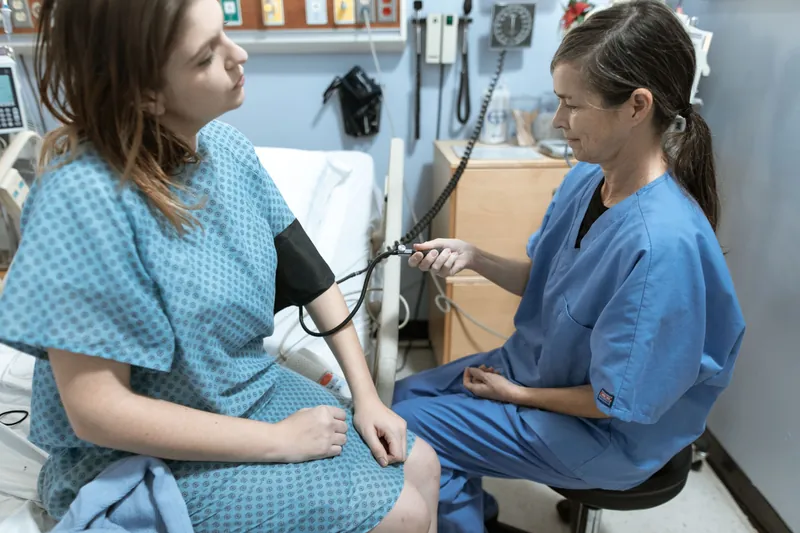
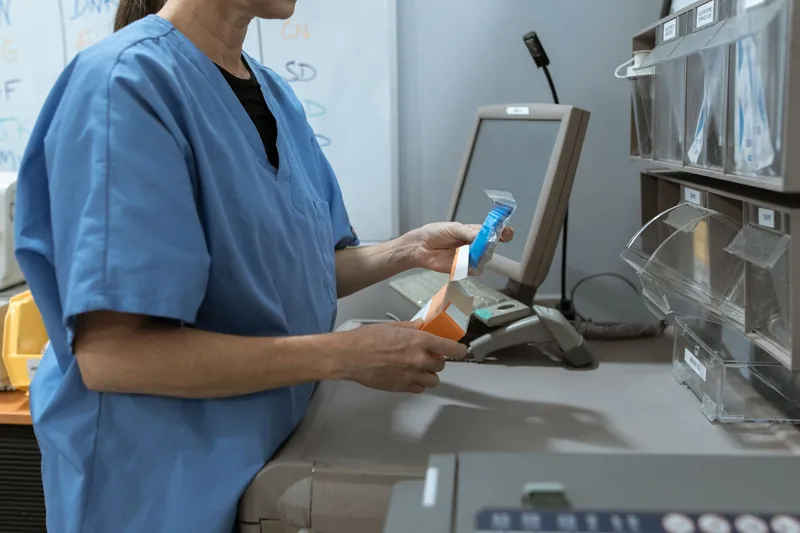
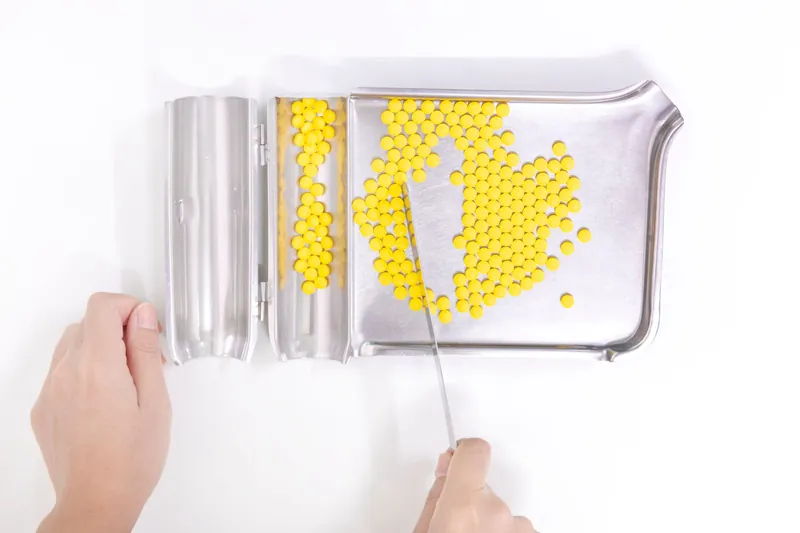
Pharmacy techs measure out and label prescriptions, enter patient records, take payments and handle insurance claims. Medical assistants take patient histories and blood pressure, help doctors during exams, collect lab specimens and book appointments. If you want hands-on work with patients during exams, medical assistant fits better. If you would like to work with medicines and customers at a pharmacy counter, pharmacy tech may fit better.
Source: BLS Occupational Outlook Handbook, Work Environment and What They Do tabs.
Which programs accept FAFSA
Programs in either field can accept FAFSA when the school takes part in federal aid and the program is long enough. For Pell, that usually means at least 600 clock hours over at least 15 weeks. In 2023–24, only 1% of awards in either field at these schools were for programs under 12 weeks. So ask for the exact hours and weeks of any program you consider.
Pharmacy tech programs are less common, and some places had none in 2023–24. No school that takes federal aid reported pharmacy tech awards in Connecticut, Delaware, Maine, New Hampshire, Pennsylvania, Rhode Island, South Dakota or Washington, D.C. That doesn't prove there are no programs there, because schools choose the program code they report under. Medical assistant programs were reported in every state.
For school lists by state, see pharmacy technician programs that accept FAFSA and medical assistant programs that accept FAFSA.
Source: 34 CFR 668.8, program length rules. IPEDS 2024 Completions.
Questions to ask before you choose
- Does my state require pharmacy technicians to register or be licensed, and does it require national certification?
- Which certification exam does this program prepare me for, and is the exam fee included?
- How many clock hours or credits is the program, and how many weeks?
- Is the program eligible for Pell Grants and federal student loans for 2026–27?
- What share of last year's students passed the exam and found jobs?