Sterile processing technician programs last from under 12 weeks to 2 years, and the certification exam costs $135 to $140. The CRCST credential also needs 400 hours of hands-on work in a hospital sterile processing department. We found 91 schools that take federal aid and trained sterile processing techs in 2023–24, so FAFSA can help if your program is long enough.
Figures and rules checked October 29, 2026. School counts are from the latest federal completions data (IPEDS, July 2023 to June 2024).
What sterile processing certification costs
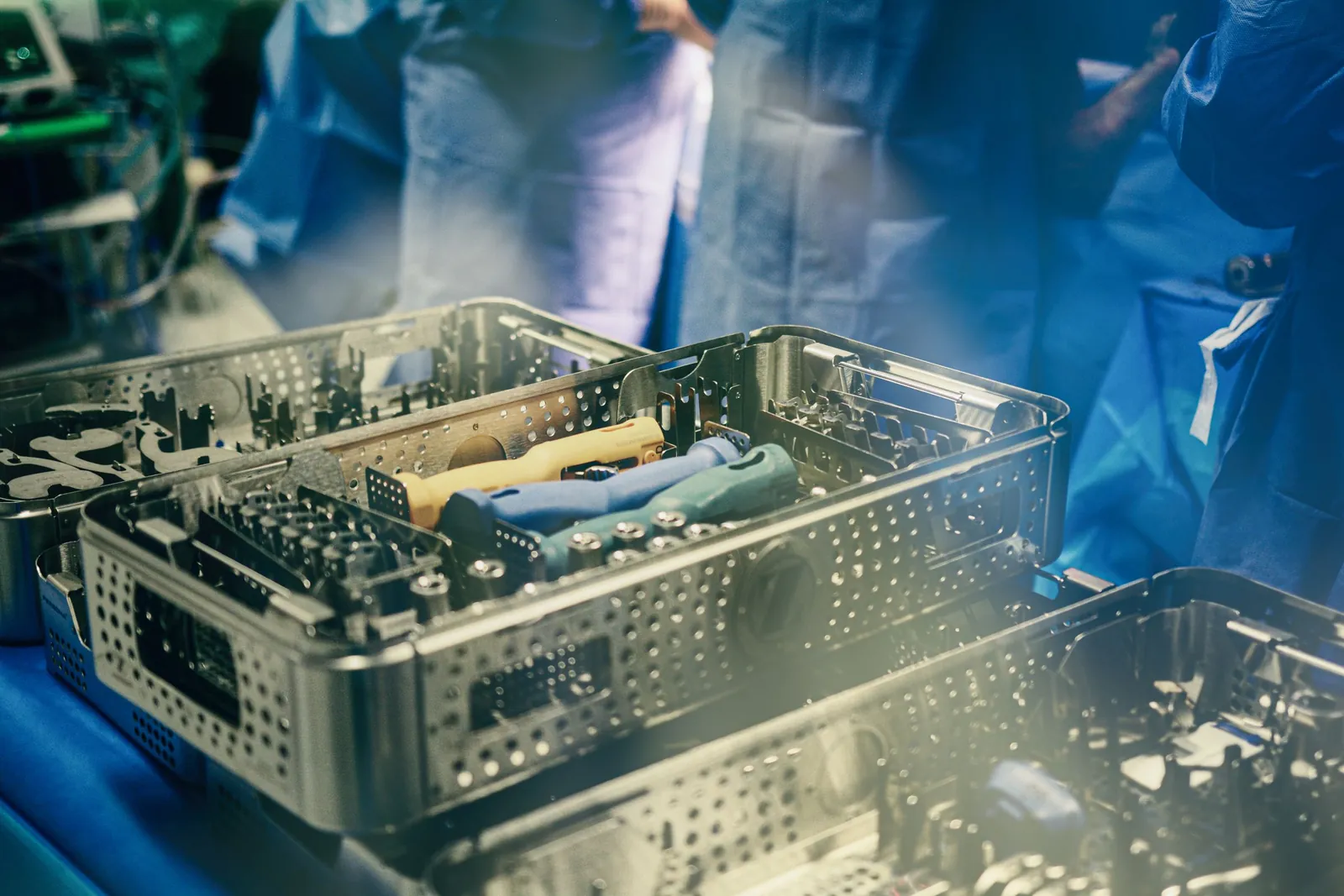
Sterile processing techs decontaminate, inspect, package and sterilize the tools used in surgery. Two groups offer entry-level sterile processing exams. This table compares them.
| CRCST | CSPDT | |
|---|---|---|
| Full name | Certified Registered Central Service Technician | Certified Sterile Processing and Distribution Technician |
| Offered by | Healthcare Sterile Processing Association (HSPA) | Certification Board for Sterile Processing and Distribution (CBSPD) |
| Exam fee | $140 (includes a $25 fee that isn't refunded) | $135 |
| Hands-on hours | 400 hours in a sterile processing department | Not required if you pass a training course with a grade of 70 or higher |
| How to qualify | 400 hours before the exam, or within 6 months after passing | Training course, or 12 months of work in sterile processing, or another listed route |
The exam fee is only part of the price. Your total also includes the training program, books and any background check or vaccines the hospital requires for clinical hours. Ask each school for its full price in writing.
Source: HSPA, CRCST certification page and 2026 CRCST application. CBSPD, Technician Certification Exam page and 2026 candidate bulletin.
The 400 clinical hours for CRCST
HSPA requires 400 hours of hands-on experience before you can hold full CRCST certification. The hours can be paid or volunteer work in a sterile processing department. They must be split across five areas:
| Area of work | Hours |
|---|---|
| Decontamination | 120 |
| Preparing and packaging instruments | 120 |
| Sterilization and disinfection | 120 |
| Storage and distribution | 24 |
| Quality assurance | 16 |
You can finish the hours in the 5 years before you apply. You can also take the exam first and finish the hours within 6 months. That second route is called provisional certification. If you don't send proof of your hours in time, you lose the certification and must test again.
HSPA does not place students in hospitals. You have to find a department yourself unless your program arranges one. Ask each school whether it arranges your 400 hours, where they take place, and whether every student gets a spot.
Source: HSPA, CRCST initial eligibility requirements, and HSPA Certification Handbook 2026.
How long sterile processing programs take
Sterile processing programs come in a range of lengths. Among the schools that take federal aid, 46% of the certificates awarded in 2023–24 were from programs of 1 to 2 years. Another 41% were from programs of 12 weeks to under a year, and 14% were from programs under 12 weeks.
Program length also decides which federal aid you can use. Clock hours are the hours you spend in class, lab and clinical training.
| Program length | Federal aid it can qualify for |
|---|---|
| At least 600 clock hours (or 16 semester credits) over at least 15 weeks | Pell Grants and federal student loans |
| 300 to 599 clock hours over at least 10 weeks | Federal student loans only, and only if at least 70% of students finish and 70% get jobs |
| 150 to 599 clock hours over 8 to 14 weeks | Workforce Pell, from July 2026, if the state's governor and the U.S. Department of Education approve the program |
Of the 91 schools, 14 reported only programs shorter than 12 weeks. A program that short is below the 15-week minimum for regular Pell, though it may fit the Workforce Pell row. Ask the school which row your program fits.
Source: 34 CFR 668.8(d) and (e), program length rules. Workforce Pell: 34 CFR 690.92. Award lengths: IPEDS 2024 Completions.
How to check if a sterile processing program accepts FAFSA
A school can take federal aid for some programs and not others. Ask about the sterile processing program by name.
- Look up the school on College Navigator (nces.ed.gov/collegenavigator). Its financial aid section shows whether students there get Pell Grants and federal loans.
- Email the financial aid office. Ask, "Is the sterile processing program eligible for Pell Grants or federal loans for 2026–27?"
- Ask how many clock hours or credits it has and how many weeks it lasts.
- Ask whether the 400 clinical hours are part of the program.
- Fill out the FAFSA at studentaid.gov and add the school's federal school code.
See sterile processing programs near you that accept FAFSA
Sterile processing programs that accept FAFSA by state
For each state, the table counts the schools that take federal aid and awarded a sterile processing certificate from July 2023 to June 2024. The schools named are the ones that awarded the most.
| State | Schools | Largest sterile processing programs (awards in 2023–24) |
|---|---|---|
| Arizona | 4 | Pima Medical Institute-Phoenix, Phoenix (50) · Brookline College-Tempe, Tempe (17) · Brookline College-Tucson, Tucson (12) |
| California | 3 | Contra Costa Medical Career College, Antioch (107) · Glendale Career College, Glendale (33) · Premiere Career College, Irwindale (15) |
| Colorado | 4 | Pima Medical Institute-Denver, Denver (33) · Front Range Community College, Westminster (22) · Aims Community College, Greeley (17) |
| Florida | 14 | Atlantic Technical College, Coconut Creek (29) · Concorde Career Institute-Tampa, Tampa (26) · Concorde Career Institute-Orlando, Orlando (26) |
| Illinois | 8 | College of DuPage, Glen Ellyn (26) · Triton College, River Grove (24) · Parkland College, Champaign (22) |
| Indiana | 1 | Ivy Tech Community College, Indianapolis (20) |
| Kansas | 1 | Washburn Institute of Technology, Topeka (4) |
| Louisiana | 5 | Baton Rouge Community College, Baton Rouge (17) · SOWELA Technical Community College, Lake Charles (11) · Williams Technical College, Houma (10) |
| Massachusetts | 1 | Massachusetts Bay Community College, Wellesley Hills (29) |
| Michigan | 8 | Dorsey College-Roseville, Roseville (40) · Dorsey College, Madison Heights (39) · Washtenaw Community College, Ann Arbor (20) |
| Minnesota | 3 | Saint Paul College, Saint Paul (39) · Anoka Technical College, Anoka (30) · Minneapolis Community and Technical College, Minneapolis (13) |
| Missouri | 1 | Concorde Career College-Kansas City, Kansas City (29) |
| Nevada | 2 | College of Southern Nevada, Las Vegas (16) · Truckee Meadows Community College, Reno (5) |
| New Jersey | 3 | American Institute of Medical Sciences & Education, Piscataway (17) · MCI Institute of NJ, Ocean (13) · Berkeley College-Woodland Park, Woodland Park (12) |
| New Mexico | 1 | Central New Mexico Community College, Albuquerque (36) |
| New York | 2 | Swedish Institute a College of Health Sciences, New York (33) · Onondaga Cortland Madison BOCES, Liverpool (6) |
| North Carolina | 2 | Davidson-Davie Community College, Thomasville (12) · Fayetteville Technical Community College, Fayetteville (8) |
| Ohio | 5 | Sinclair Community College, Dayton (24) · Lorain County Community College, Elyria (10) · Cuyahoga Community College District, Cleveland (9) |
| Pennsylvania | 2 | Philadelphia Technician Training, Philadelphia (92) · Community College of Allegheny County, Pittsburgh (2) |
| Puerto Rico | 1 | Antilles School of Technical Careers, San Juan (39) |
| South Carolina | 1 | Greenville Technical College, Greenville (19) |
| Tennessee | 3 | Tennessee College of Applied Technology-Murfreesboro, Murfreesboro (15) · Nashville State Community College, Nashville (6) · Concorde Career College-Memphis, Memphis (4) |
| Texas | 4 | Fortis Institute, Houston (63) · Fortis College, Houston (47) · Concorde Career College-Grand Prairie, Grand Prairie (27) |
| Utah | 1 | Mountainland Technical College, Lehi (16) |
| Virginia | 1 | J Sargeant Reynolds Community College, Richmond (2) |
| Washington | 4 | Clover Park Technical College, Lakewood (15) · Columbia Basin College, Pasco (11) · Yakima Valley College, Yakima (5) |
| West Virginia | 2 | Martinsburg College, Martinsburg (2) · Southern West Virginia Community and Technical College, Logan (1) |
| Wisconsin | 4 | Herzing University-Madison, Madison (341) · Waukesha County Technical College, Pewaukee (7) · Northcentral Technical College, Wausau (3) |
In 23 states and Washington, D.C., no school reported sterile processing awards in this data. In the South, those states are Alabama, Arkansas, Delaware, Georgia, Kentucky, Maryland, Mississippi and Oklahoma. In the Northeast, they are Connecticut, Maine, New Hampshire, Rhode Island and Vermont. The rest are Alaska, Hawaii, Idaho, Iowa, Montana, Nebraska, North Dakota, Oregon, South Dakota and Wyoming.
If your state isn't listed, ask nearby hospitals where their sterile processing staff trained. Some college systems also report all campuses as one school, as Ivy Tech does in Indiana. Only 1 of the 91 schools reported a fully online sterile processing program, since the hands-on hours have to be done in person.
A school on this list takes part in federal aid and trained sterile processing techs that year. Its program may still be too short for Pell, so check the program you want.
Source: U.S. Department of Education, IPEDS 2024 Completions (program code 51.1012, Sterile Processing Technology/Technician) and 2024 Institutional Characteristics.
Community college or private career school
Of the 91 schools, 58 are public, 31 are private for-profit and 2 are private nonprofit. The federal aid rules are the same at each type.
College Navigator shows each school's average net price, which is what students paid after grants. Compare that with the Pell Grant in your financial aid offer. For 2026–27, the most a full-time student can get from Pell for a full year is $7,395. Our guide to how much a Pell Grant is per semester shows how the amount is split.
Source: U.S. Department of Education, Dear Colleague Letter GEN-26-01.
CRCST or CBSPD, which should you take?
Both exams are entry-level tests of the same work. If your program includes 400 hours in a hospital department, you will meet the CRCST hours rule when you finish. The CBSPD exam lets you qualify with a training course passed at 70% or higher, which helps if you can't get clinical hours yet. CBSPD also accepts 12 months of sterile processing work.
Check job posts near you before you choose. Many list the credential the employer wants. CRCST holders renew every year with continuing education, so plan for that cost too.
Source: HSPA, 2026 CRCST application. CBSPD, Technician Certification Exam page.
Other ways to pay for sterile processing training
If FAFSA won't cover your program, try these options:
- Your local American Job Center may pay for approved training through WIOA, the federal Workforce Innovation and Opportunity Act. People on public assistance and people with low incomes get priority. Find a center at careeronestop.org.
- Ask hospitals near you whether they hire trainees and pay for their certification.
- Veterans can use the GI Bill for VA-approved programs. VA approval is separate from FAFSA, so check both.
If you later want to work in the operating room itself, compare surgical tech programs that accept FAFSA, which are longer and cost more.
Source: U.S. Department of Labor, WIOA Adult and Dislocated Worker Program.
Questions to ask a sterile processing program
- Is this program eligible for Pell Grants or federal loans for 2026–27?
- How many clock hours and weeks is it?
- Does it place me in a hospital for my 400 clinical hours?
- Does the price include the CRCST or CBSPD exam fee?
- How many students passed the exam last year, and how many found jobs?
If a school can't say where students do their 400 hours, ask to speak with a recent graduate.