Some phlebotomy programs accept FAFSA, but many don't, because the course is too short. Between July 2023 and June 2024, 313 schools that take federal student aid awarded phlebotomy certificates. More than half of those awards (58%) were for programs under 12 weeks, and courses that short usually can't get a regular Pell Grant.
Figures and rules checked October 29, 2026. School counts are from the latest federal completions data (IPEDS, July 2023 to June 2024).
Why many phlebotomy courses don't qualify for Pell
A regular Pell Grant needs a program of at least 600 clock hours (or 16 semester credits) that runs at least 15 weeks. Clock hours are the hours you spend in class, lab or clinical practice. A typical phlebotomy course is much shorter than that.
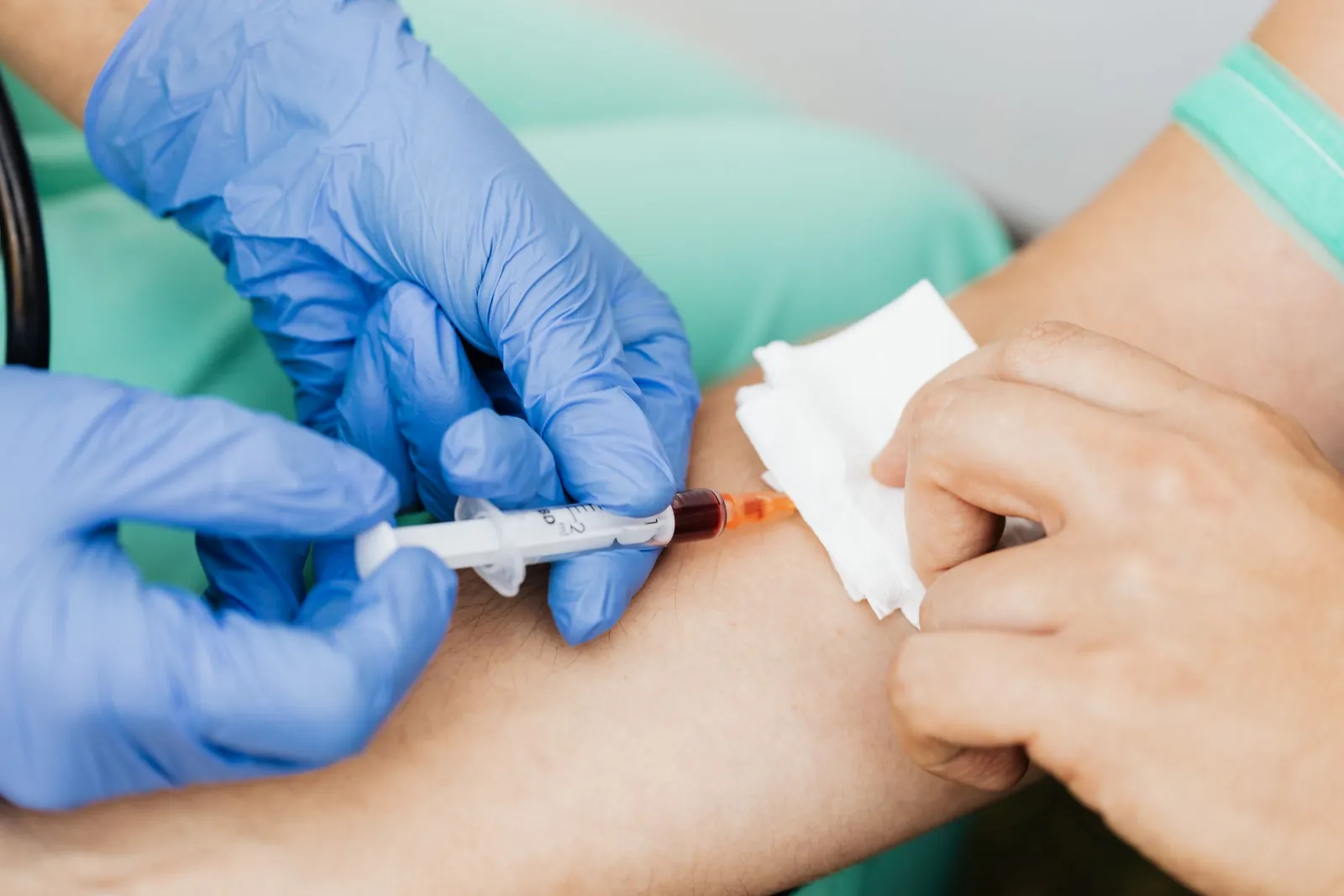
California's state rules show how short the training can be. A beginner in California needs 40 hours of classroom teaching and 40 hours of clinical practice. The clinical hours must include at least 50 blood draws from a vein and 10 skin punctures. That is about 80 hours in total, which is well below every federal aid minimum.
This table shows which federal aid each program length can get.
| Program length | What federal aid you can use |
|---|---|
| At least 600 clock hours (or 16 semester credits) and at least 15 weeks | Pell Grants and federal student loans |
| 300 to 599 clock hours and at least 10 weeks | Federal student loans only, and only if at least 70% of students finish and 70% get jobs |
| 150 to 599 clock hours over 8 to 14 weeks | Workforce Pell, from July 2026, if your state and the U.S. Department of Education approve the program |
| Under 150 clock hours, or under 8 weeks | No federal student aid |
A phlebotomy program can reach the first row when it is part of a longer certificate. Some schools teach phlebotomy inside a medical assistant or patient care technician program, and those longer programs often qualify for Pell.
Source: 34 CFR 668.8(d) and (e), program length rules. Workforce Pell: Public Law 119-21, Sec. 83002, and 34 CFR 690.92. California: Department of Public Health, Phlebotomy Technician I certificate requirements.
What Workforce Pell means for phlebotomy students
Workforce Pell is a new kind of Pell Grant for short job training, and it started on July 1, 2026. A program qualifies if it has 150 to 599 clock hours and runs 8 to 14 weeks. Some phlebotomy courses at community colleges fall in that range.
A program needs two approvals before it can use Workforce Pell. Your state's governor must approve it first, and then the U.S. Department of Education must approve it. The program must also show that at least 70% of students finish and at least 70% find jobs.
By October 2026, the Department had approved phlebotomy programs at Kilgore College in Texas and Metropolitan Community College in Omaha, Nebraska. In North Carolina, four colleges had state approval for phlebotomy programs and were still waiting for the Department. They are Blue Ridge, Central Carolina, Central Piedmont and Gaston. Approvals are added on a rolling basis, so ask your school for the current status. Our page on Workforce Pell approved programs tracks the list.
Workforce Pell is paid in proportion to the program's length. One federal example uses an 11-week, 375-hour program at a school that counts 26 weeks and 900 hours as a full year. At the 2026–27 maximum, that program's Workforce Pell is $3,081.
Source: Public Law 119-21, Sec. 83002. Congressional Research Service, Workforce Pell Grants (IF13253). Office of the Texas Governor, Workforce Pell approval announcement (October 2, 2026). NASFAA, "ED Approves More Workforce Pell Programs" (2026). NC Department of Commerce, List of Programs Approved for Workforce Pell (updated October 26, 2026).
How to check if a phlebotomy program accepts FAFSA
Ask about the exact phlebotomy program, because a school may have a short course that takes no aid and a longer one that does.
- Look up the school on College Navigator (nces.ed.gov/collegenavigator) to see whether its students get Pell Grants and federal loans.
- Email the financial aid office with the program name. Ask, "Is this program eligible for Pell, Workforce Pell or federal loans for 2026–27?"
- Ask how many clock hours and weeks the program has.
- Ask whether the program is credit or non-credit. Non-credit courses run by a continuing education office often take no federal aid.
- Fill out the FAFSA at studentaid.gov and add the school's federal school code.
- Wait for a written financial aid offer before you pay a deposit.
Find phlebotomy programs near you that accept federal aid
Phlebotomy schools that accept FAFSA by state
This table counts the schools in each state that take federal student aid and trained phlebotomists. Each one awarded at least one phlebotomy certificate between July 2023 and June 2024. The largest programs are the three schools in each state that awarded the most phlebotomy certificates that year.
| State | Schools | Largest programs (awards in 2023–24) |
|---|---|---|
| Alaska | 3 | Charter College, Anchorage (38) · University of Alaska Anchorage, Anchorage (11) · Alaska Career College, Anchorage (6) |
| Arizona | 14 | Pima Medical Institute-Phoenix, Phoenix (136) · GateWay Community College-Central City, Phoenix (95) · Pima Medical Institute-East Valley, Mesa (86) |
| Arkansas | 13 | Arkansas State University-Newport, Newport (54) · Black River Technical College, Pocahontas (47) · University of Arkansas at Monticello, Monticello (34) |
| California | 17 | Contra Costa Medical Career College, Antioch (186) · Healthcare Career College, Paramount (104) · MTI College, Sacramento (78) |
| Colorado | 11 | Front Range Community College, Westminster (153) · Red Rocks Community College, Lakewood (51) · Arapahoe Community College, Littleton (39) |
| Connecticut | 1 | Connecticut State Community College, New Britain (14) |
| Delaware | 1 | Polytech Adult Education, Woodside (23) |
| Florida | 34 | Lively Technical College, Tallahassee (108) · Compu-Med Vocational Careers Corp, Hialeah (104) · Traviss Technical College, Lakeland (103) |
| Georgia | 19 | Southern Crescent Technical College, Griffin (61) · Wiregrass Georgia Technical College, Valdosta (40) · Central Georgia Technical College, Warner Robins (39) |
| Illinois | 21 | Midwest Technical Institute-Illinois, Springfield (126) · Southwestern Illinois College, Belleville (101) · City Colleges of Chicago-Malcolm X College, Chicago (72) |
| Indiana | 1 | Ivy Tech Community College, Indianapolis (180) |
| Iowa | 2 | Des Moines Area Community College, Ankeny (12) · Indian Hills Community College, Ottumwa (6) |
| Kansas | 7 | Hutchinson Community College, Hutchinson (36) · Washburn Institute of Technology, Topeka (34) · Barton County Community College, Great Bend (17) |
| Louisiana | 11 | Louisiana Delta Community College, Monroe (47) · Nunez Community College, Chalmette (33) · Central Louisiana Technical Community College, Alexandria (32) |
| Maine | 2 | Northeast Technical Institute, Scarborough (21) · Washington County Community College, Calais (4) |
| Massachusetts | 5 | Massachusetts Bay Community College, Wellesley Hills (28) · Quinsigamond Community College, Worcester (23) · Cape Cod Community College, West Barnstable (9) |
| Michigan | 7 | Lansing Community College, Lansing (43) · Wayne County Community College District, Detroit (14) · Oakland Community College, Auburn Hills (13) |
| Minnesota | 10 | Mayo Clinic College of Medicine and Science, Rochester (104) · Lake Superior College, Duluth (26) · North Hennepin Community College, Brooklyn Park (21) |
| Mississippi | 3 | Delta Technical College-Mississippi, Horn Lake (61) · Concorde Career College-Southaven, Southaven (14) · Mississippi Delta Community College, Moorhead (5) |
| Missouri | 2 | Midwest Technical Institute-Missouri, Springfield (38) · Concorde Career College-Kansas City, Kansas City (13) |
| Montana | 2 | Montana State University, Bozeman (6) · Miles Community College, Miles City (2) |
| Nevada | 4 | Northwest Career College, Las Vegas (577) · College of Southern Nevada, Las Vegas (74) · Las Vegas College, Las Vegas (38) |
| New Hampshire | 1 | River Valley Community College, Claremont (3) |
| New Jersey | 2 | American Institute of Medical Sciences & Education, Piscataway (107) · Best Care College, East Orange (17) |
| New Mexico | 8 | Central New Mexico Community College, Albuquerque (63) · San Juan College, Farmington (45) · Clovis Community College, Clovis (31) |
| New York | 4 | Erie 1 BOCES, West Seneca (26) · Dutchess Community College, Poughkeepsie (15) · Niagara County Community College, Sanborn (6) |
| North Carolina | 6 | Southeastern Community College, Whiteville (23) · Asheville-Buncombe Technical Community College, Asheville (21) · Cleveland Community College, Shelby (16) |
| Ohio | 32 | Sinclair Community College, Dayton (41) · Butler Technology and Career Development Schools, Monroe (34) · Mid-EastCTC-Adult Education, Zanesville (33) |
| Oklahoma | 5 | Central Technology Center, Drumright (27) · Meridian Technology Center, Stillwater (20) · Pontotoc Technology Center, Ada (10) |
| Oregon | 2 | Tillamook Bay Community College, Tillamook (9) · Clackamas Community College, Oregon City (3) |
| Pennsylvania | 7 | Central Penn College, Summerdale (14) · Montgomery County Community College, Blue Bell (14) · Penn Commercial Business/Technical School, Washington (14) |
| Rhode Island | 1 | Community College of Rhode Island, Warwick (16) |
| South Carolina | 5 | Northeastern Technical College, Cheraw (48) · Horry-Georgetown Technical College, Conway (40) · York Technical College, Rock Hill (15) |
| South Dakota | 2 | Southeast Technical College, Sioux Falls (15) · Western Dakota Technical College, Rapid City (7) |
| Tennessee | 3 | Academy of Allied Health Careers, Chattanooga (67) · Tennessee College of Applied Technology-Elizabethton, Elizabethton (39) · Concorde Career College-Memphis, Memphis (30) |
| Texas | 7 | Pima Medical Institute-Houston, Houston (59) · Pima Medical Institute-San Antonio, San Antonio (57) · Rio Grande Valley College, Pharr (56) |
| Utah | 7 | Mountainland Technical College, Lehi (194) · Davis Technical College, Kaysville (141) · Dixie Technical College, Saint George (93) |
| Virginia | 3 | Eastern Virginia Career College, Fredericksburg (15) · Chester Career College, CHESTER (14) · American National University, Salem (3) |
| Washington | 14 | Bates Technical College, Tacoma (129) · Green River College, Auburn (81) · Renton Technical College, Renton (47) |
| West Virginia | 6 | Pierpont Community and Technical College, Fairmont (40) · Academy of Careers and Technology, Beckley (21) · James Rumsey Technical Institute, Martinsburg (15) |
| Wisconsin | 7 | Madison Area Technical College, Madison (62) · Milwaukee Area Technical College, Milwaukee (29) · Northcentral Technical College, Wausau (16) |
| Wyoming | 1 | Casper College, Casper (5) |
Alabama, Hawaii, Idaho, Kentucky, Maryland, Nebraska, North Dakota, Vermont and Washington, D.C. had no school that reported phlebotomy awards in this data. Some college systems report all their campuses as one school. Ivy Tech Community College in Indiana is one example, so Indiana shows 1 school.
Being on this list means the school takes part in federal aid and trains phlebotomists. It doesn't mean its phlebotomy course qualifies. In this data, 134 of the 313 schools reported only phlebotomy awards under 12 weeks. Some short non-credit courses don't appear in this data at all, including some of the Workforce Pell programs named above.
Source: U.S. Department of Education, IPEDS 2024 Completions (program code 51.1009, Phlebotomy Technician/Phlebotomist) and 2024 Institutional Characteristics.
Community college or private phlebotomy school
Of the 313 schools, 255 are public, 52 are private for-profit and 6 are private nonprofit. Community colleges also run many phlebotomy courses through continuing education, outside the federal aid system.
A short phlebotomy course that takes no aid may still cost less than a longer program that does. Ask each school for its total price, including the exam fee, scrubs and a background check. Then compare that total with the aid you would get.
How much of phlebotomy training Pell can cover
For a regular Pell program, the 2026–27 maximum is $7,395 for a full year of full-time study (July 1, 2026 to June 30, 2027). A phlebotomy program shorter than a full year gets a share of that amount, based on its hours and weeks. Your Student Aid Index (SAI), the number the FAFSA uses to measure what your family can pay, can lower it further.
Workforce Pell uses the same method, so short programs get smaller awards. You don't repay Pell unless you leave the program early. Our guide to how much a Pell Grant is per semester explains how the amount is set.
Source: U.S. Department of Education, Dear Colleague Letter GEN-26-01. Congressional Research Service, IF13253.
What phlebotomists earn
The median pay for phlebotomists was $45,230 a year, or $21.75 an hour, in May 2025. Half of phlebotomists earned more than that and half earned less. About 143,900 people worked as phlebotomists in 2025.
The Bureau of Labor Statistics expects phlebotomist jobs to grow 7% from 2025 to 2035, much faster than average. Most phlebotomists finish a program at a community college, vocational school or technical school in less than a year.
Many employers want a certification. One common exam is the Certified Phlebotomy Technician (CPT) from the National Healthcareer Association. It asks for proof of at least 30 blood draws from a vein and 10 capillary or finger sticks on live people. Check that your program gives you enough supervised draws to meet that rule.
Source: U.S. Bureau of Labor Statistics, Occupational Outlook Handbook, Phlebotomists. National Healthcareer Association, CPT eligibility.
Other ways to pay for phlebotomy training
If your phlebotomy course doesn't qualify for FAFSA, you can still look for help:
- Your local American Job Center may pay for training through WIOA, the federal Workforce Innovation and Opportunity Act. People on public assistance and other adults with low incomes get priority.
- Ask hospitals and blood centers near you whether they train new phlebotomists on the job or pay for a course for new hires.
- Ask the college whether it offers a payment plan for non-credit courses.
- Veterans can use the GI Bill at programs the VA has approved.
Short courses also make phlebotomy one of the fastest healthcare certifications to finish, so paying out of pocket may cost less than a longer program.
Source: U.S. Department of Labor, WIOA Adult Program.
Questions to ask a phlebotomy school before you enroll
- Is this phlebotomy program eligible for Pell, Workforce Pell or federal loans?
- How many clock hours and weeks is it?
- How many supervised blood draws will I do, and where?
- Which certification exam does the program prepare me for, and is the fee included?
- What is the total price, and is there a payment plan?
- What share of last year's students finished and found phlebotomy jobs?
Ask the school to put the price and aid details in your written financial aid offer.
See phlebotomy and other short healthcare programs that accept FAFSA