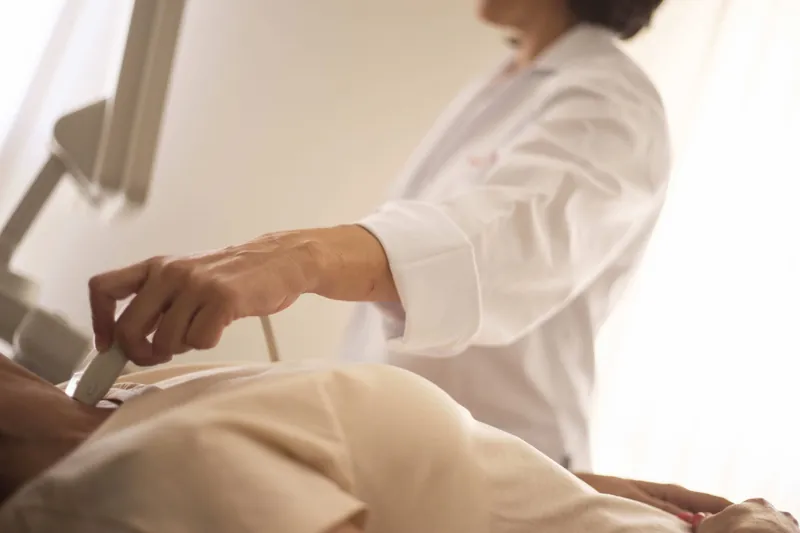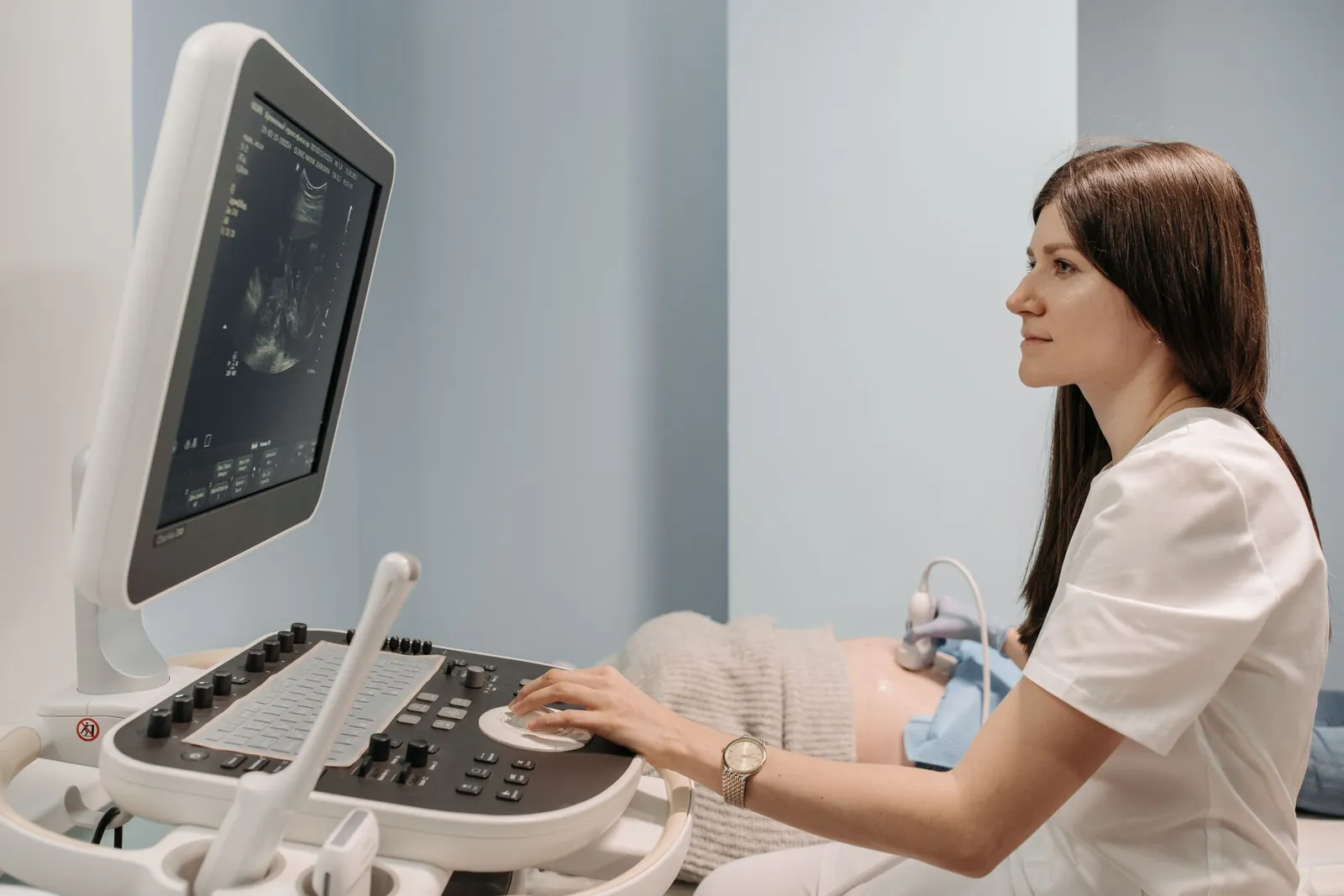
The usual path to becoming a sonographer is an associate degree, which takes about 2 years of full-time study. Add the time for prerequisite classes before you start and for certification exams after. Certificate programs run 1 to 4 years and often expect a degree first, and a bachelor's degree takes about 4 years.
Figures and rules checked November 2, 2026.
Sonographer training paths and how long each takes
There are three main school paths, and the right one depends on what education you already have. This table compares them.
| Path | Typical length | Who it fits |
|---|---|---|
| Certificate | 1 to 4 years | People who already have a degree or healthcare training |
| Associate degree | At least 2 years, after prerequisites | People starting without a degree |
| Bachelor's degree | About 4 years | People who want a 4-year degree |
The Bureau of Labor Statistics says sonographers typically need at least an associate degree or a postsecondary certificate. In federal data for 2023–24, 66% of sonography awards were associate degrees and 13% were bachelor's degrees. Another 19% were certificates of 1 to 4 years, and most of those were 2 years or longer. So a certificate isn't always the shorter path.
Two public programs show real timelines. The Community College of Rhode Island's associate degree is a 24-month program. Labette Community College in Kansas runs a 14-month program for people who already hold an associate or bachelor's degree.
Source: U.S. Bureau of Labor Statistics, Occupational Outlook Handbook. IPEDS 2024 Completions (program code 51.0910) and IPEDS glossary award definitions. CCRI 2026–27 Academic Catalog. Labette Community College program page.
Do prerequisites add time to sonography school
Yes, prerequisite classes often add time before the sonography program itself starts. Many programs require college courses before you can apply. The Community College of Rhode Island, for example, asks for English composition, college algebra, physics and human biology first.
Programs also limit how many students they take. If you aren't admitted the first time, you may wait for the next start date. Labette starts once a year, each June, and the Community College of Rhode Island starts each September.
Ask each program what you must finish before applying, how many seats it has and how often it starts a class. Your timeline depends on those answers as well as the program length.
Source: CCRI 2026–27 Academic Catalog. Labette Community College, Diagnostic Medical Sonography program page.
How long does ARDMS certification take
ARDMS certification adds little time if you finish an accredited program. Graduates of programs accredited by CAAHEP (the Commission on Accreditation of Allied Health Education Programs) can apply with no extra work experience. In some programs, students can apply up to 60 days before graduation.
To earn the RDMS credential, you pass two exams:
- The Sonography Principles and Instrumentation (SPI) exam, about 110 questions over 2 hours.
- One specialty exam, such as abdomen, which is about 165 questions over 3 hours.
You can take the two in either order, but you must pass both within five years. ARDMS lets students take the SPI before graduation if they have passed a physics course. If you fail a specialty exam, you must wait 60 days before retaking it.
Source: ARDMS (Inteleos), SPI Requirement and Specialty Examination Prerequisites, October 2026. Inteleos, SPI and Abdomen exam pages.
How long it takes without an accredited program
The route takes longer if your program isn't CAAHEP-accredited. ARDMS then usually asks for 12 months of full-time clinical ultrasound work before you can take its exams. It counts full-time as 35 hours a week for at least 48 weeks, or 1,680 hours.
That 12 months comes on top of your schooling. You also need a qualifying education, such as a 2-year patient-care allied health program or a bachelor's degree in any field. Volunteer or unpaid work doesn't count.
Students in a bachelor's program in sonography are an exception. ARDMS lets them apply up to one year before they finish, once they have done 12 months of full-time clinical work in the program.
Source: ARDMS (Inteleos), SPI Requirement and Specialty Examination Prerequisites, October 2026, Pathways 1, 3A and 3B.
Fastest way to become a sonographer
The fastest route is a certificate program if you already have a degree or healthcare experience. Pick one that is CAAHEP-accredited so you can sit for ARDMS exams right after you finish. Taking the SPI exam while you are still a student means one less exam after you graduate.
If you are starting from scratch, a full-time associate degree at an accredited program is usually the fastest route. Finish your prerequisites first so you are ready to apply when the next class opens. Our guide to sonography programs that accept FAFSA lists schools by state and explains how to check accreditation.
See accredited sonography programs near you
Do you need a license to work as a sonographer
Some states require sonographers to hold a state license. The Bureau of Labor Statistics says employers may also require or prefer professional certification. CareerOneStop lists each state's licensing board.
Check your state's rules before you choose a program, so your training meets them.
Source: U.S. Bureau of Labor Statistics, Occupational Outlook Handbook, Diagnostic Medical Sonographers.
Is it worth the time
The median pay for diagnostic medical sonographers was $96,590 a year in May 2025. The Bureau of Labor Statistics expects jobs to grow 14% from 2025 to 2035, much faster than average. It projects about 6,000 openings each year.
If you need a shorter healthcare path, see our guide to the fastest healthcare certifications. You can also compare how long it takes to become a surgical tech.
Source: U.S. Bureau of Labor Statistics, Occupational Outlook Handbook, Diagnostic Medical Sonographers.
Questions to ask a sonography program about time to finish
- What prerequisites must I finish before I apply?
- How many months is the program, and when does each class start?
- Is the program accredited by CAAHEP?
- Can students take the SPI exam before graduating?
- What share of last year's class finished on time?